banner_image

Nature Noughts and Crosses

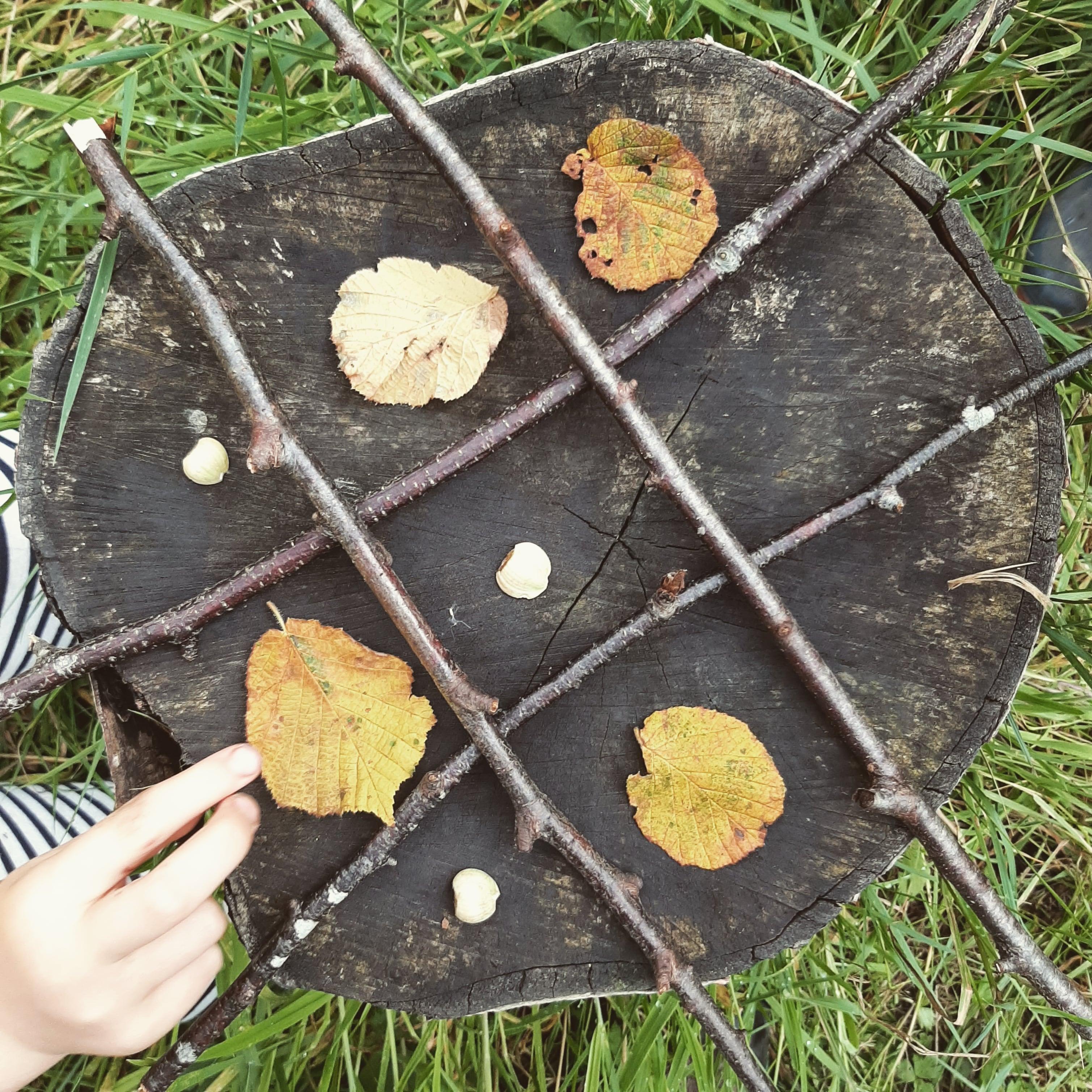
This is an activity for 2 people that you can do just about anywhere.


Step 1

On your next walk, or in the garden, collect:

4 quite straight things to make a grid (try sticks, driftwood, long pieces of grass);

5 of one thing and 5 of another (try conkers, pine cones, leaves, shells, stones) or 10 stones.

Step 2

If all your 10 things are the same, such as stones, draw on these to make 2 sets of 5.

Step 3

Place your sticks or other straight things in a grid pattern.

Step 4

Take a set of 5 things each and take turns placing them in the grid until one of you gets a line of 3 in a row.

ALTERNATIVE GAMES

Revenge In this version, the player that gets 3 in a row first wins, unless their opponent can get 3 in a row on their next move, in which case they lose.

Reverse Exactly the same as the standard game but you’re forcing your opponent to get 3 in a row. The one that is forced in to 3 in a row first loses.

Wild The same as a standard game except that each player can play either X or O on each turn. The first to get 3 in a row of either wins.

Reverse Wild A combination of reverse and wild. Each player can play either an X or O on each turn, whilst forcing their opponent to get 3 in a row.
banner_image

Estimate the age of a tree

There are many things that have an impact on how fast trees grow, including the type of tree, where it grows, how much light it has, and how close other trees are. Here is a good way to estimate the age of most broadleaf trees.

You will need:

A tree! Try an oak, ash, beech or sycamore. Trees with a straight single trunk are easiest.A long tape measure.A calculator may be useful unless.


METHOD

Step 1

Have a look around at the area the tree is in to give you the growth rate. Have a think about how good the environment is for a tree to grow in:

  1. Ideal e.g. an open area with shelter from the wind = 2.5 growth rate.
  2. Average e.g. Parkland with other trees or a the edge of the woodland = 2 growth rate.
  3. Poor e.g. Inside a woodland amongst lots of other trees or on poor ground and exposed to the wind = 1.5 growth rate.

Step 2

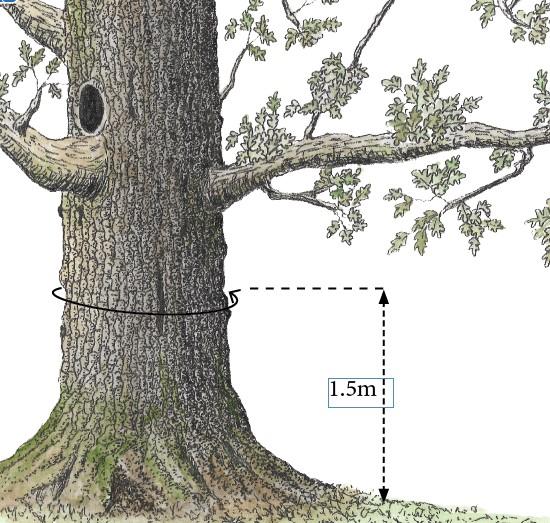
Measure around the tree trunk (the circumference) in cm at about 1.5m above the ground.

Step 3

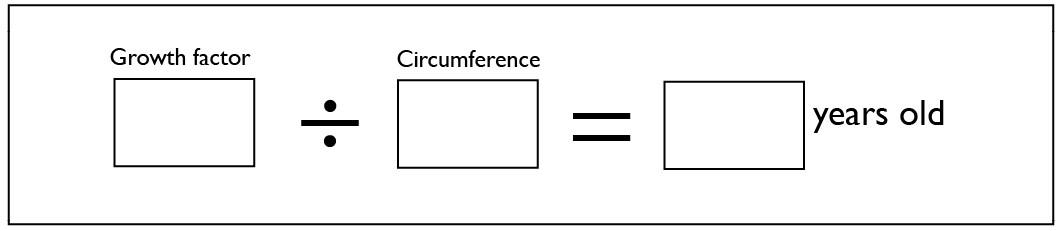
Divide the measurement around the tree in step 2 by the growth rate from step 1 to give you an estimate for the age of the tree.

Example: 300cm circumference on a woodland boundary 300 ÷ 2 = 150 years old

banner_image

Soil acidity and plant preferences

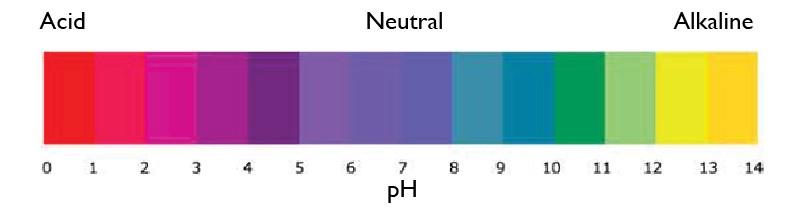
Red cabbage contains a pigment (anthocyanin) that changes colour when mixed with acid or alkaline, which is measured as pH. Plants are adapted to different conditions, including soil pH. You can use red cabbage water to test the pH of soil and compare with the types of plant that grow in it.


You will need:

Red cabbageWaterA bottleSmall containers (recycled jars are great, especially if they’re different as you can use this to identify your samples)Labels for your containers (if the container aren’t different and identifiable)A teaspoonSomewhere to collect soil samples


METHOD

  1. Chop up red cabbage and add about twice as much boiling water (adult!).
  2. When cooled, strain the water and put the water in a bottle to take out with you to test.
  3. Collect about 2 teaspoons of soil in each container.
  4. For each sample, mark the container and record the location (you can use grid reference, the What3Words reference or draw a map).
  5. Record which plants are growing in each sample location. You can record them straight away and/or revisit your sample locations and see which plants are growing at different times of year.
  6. Add enough cabbage water to each sample to cover the soil plus enough water above the soil to see the colour of the water.
  7. After about 20 minutes, check the colour against the chart to see the soil pH (it may be easier to pour a bit of water out onto a light surface, like the container lid)

banner_image

Animal signs (scat) modelling

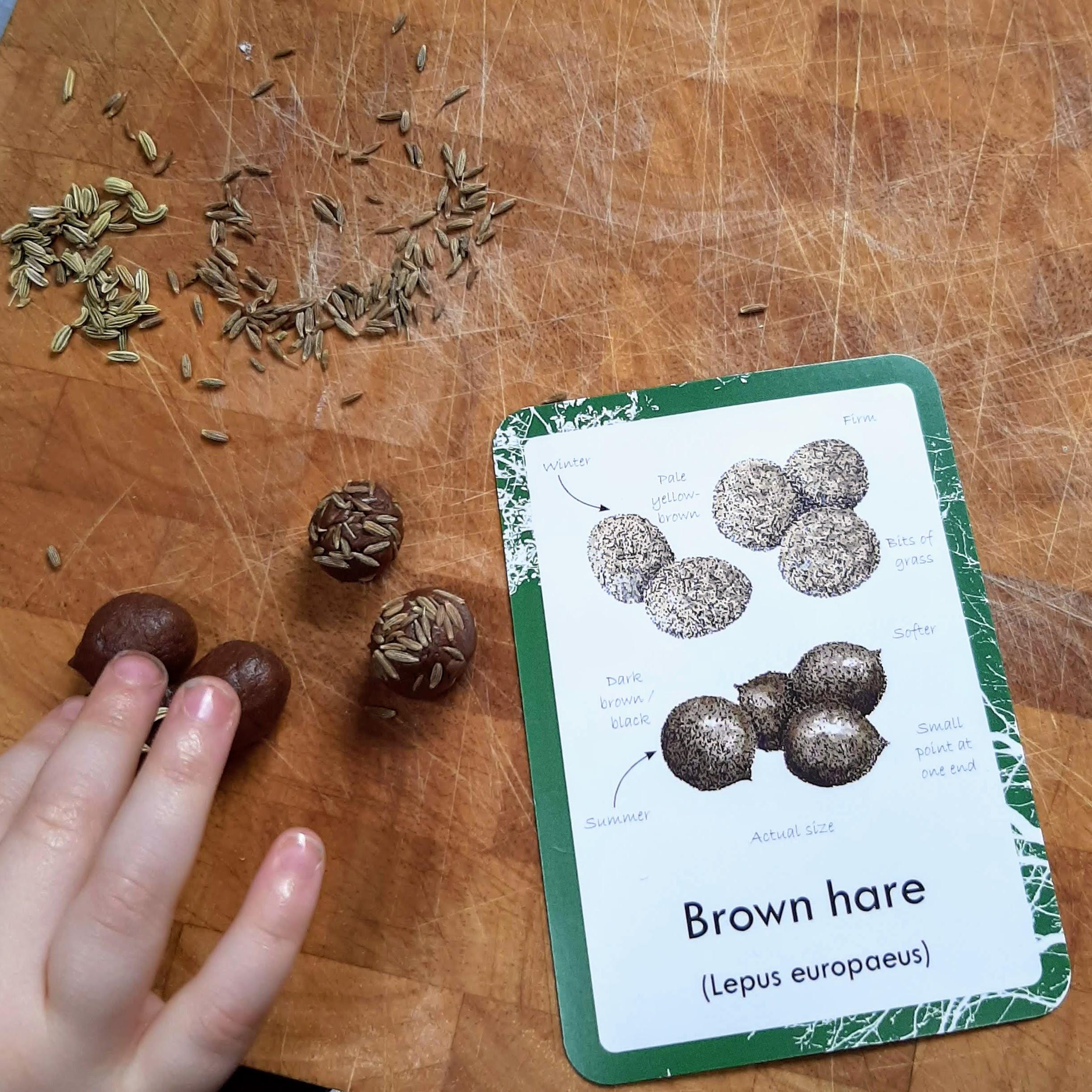
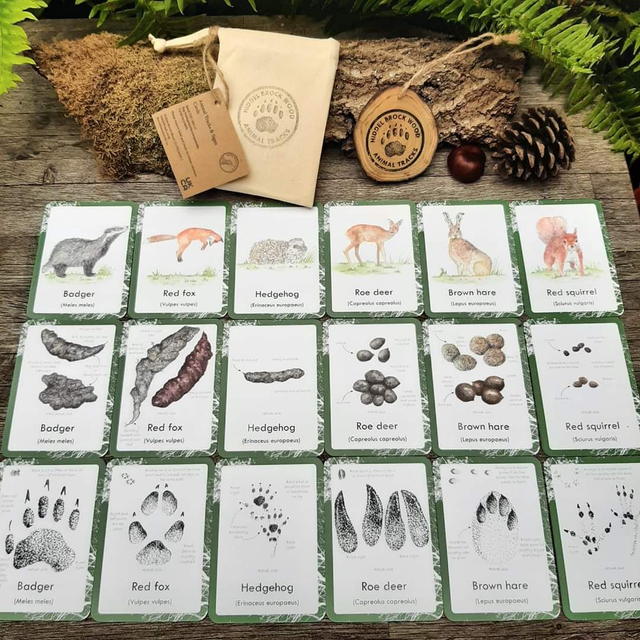
Modelling animal scat/droppings/poo is a fun way for children to learn how to identify different animals by the scat they find, as well as an opportunity to talk about what different animals eat in the wild. We did this activity with my Animal Tracks and Signs cards, but it could also be done by looking up information online.


Ingredients (example only; any moldable biscuit dough would work):

160g plain flour65g icing sugar40g cocoa powder2 teaspoons baking powder1 teaspoons caster sugarVanilla extract (optional)65g butter30ml milk1 egg yolkHerbs, spices, fruit, rice paper or anything else you can find to simulate scat texture/additions.

METHOD

  1. Mix the first 5 (dry) ingredients;
  2. Rub in the butter;
  3. Mix in the vanilla, milk and egg;
  4. Cover and refridgerate for 30 mins;
  5. Whilst the dough is resting, look at the Tracks & Signs Cards or research animal scat online; raid the kitchen for things that can be used to simulate textures of the scat. We used sesame seeds for bits of insects, feathers made from rice paper, various fennel seeds, cumin seeds and other spices for the texture of vegetation, berries;
  6. Mold the scat, adding the various ingredients;
  7. Bake in a pre-heated oven for 12-15 minutes.

Alternatives:

  1. Crush about 8 rich tea biscuits, mix with 250g melted chocolate, a small handful of sticky dried fruit (e.g. dates or apricots) and 2 tbsp of golden syrup. Refridgerate and mold. No baking required.
  2. For a non-edible salt dough options, mix 2 parts plain flour, 1 part table salt and 1 part water with a couple of tablespoons of cocoa powder for colour. Bake in a very low oven for about 3 hours, if you want to keep it! Unbaked, this is a great option for outdoors, using natural resources for the additions.


Shopping Cart

    Your cart is empty